
← Back to blogs
Investment Opportunities
Best Suburbs to Invest in Property in Melbourne & VIC
Propell Property
5 August 2026 • 15 min read
Propell Property
5 August 2026 • 15 min read
Despite common recommendations in Reddit threads, there is no single best suburb to buy an investment property in Melbourne at all times. There are, though, several genuinely strong candidates across Melbourne’s growth corridors and regional Victoria as at 2026.
In this guide, we’ve shortlisted the top areas across Melbourne and regional Victoria, stacked up against the fundamental criteria we use to assess suburb performance.
Four core performance measures are assessed as part of the criteria for suburb investment potential:
Capital growth drivers
Prices rise where more people want to live than there is housing to hold them. Consider population growth, funded infrastructure, a broadening employment base, gentrification, and limited developable land.
Rental yield and vacancy
Gross yield tells you what the property earns against what it costs, and vacancy tells you how easily it rents. A yield above 4% paired with vacancy under 2% is a healthy combination in the current Victorian market.
Supply and demand signals
Low stock on the market, short selling periods, and short leasing periods all point to pressure on prices and rents.
Demographics and amenities
Schools, transport and shops attract long-term tenants who often cost you less over time than high headline rents with frequent turnover.
Growth and yield usually pull in opposite directions, meaning that higher-yielding suburbs tend to grow in capital gains more slowly, and the fastest-growing suburbs may cost cash flow in the early years of the investment. Income, borrowing capacity, and investment strategy typically guide your investment decisions. Now let’s dive into the suburbs our strategic team recommends exploring as of 2026.
Melbourne has long been one of Australia's most important residential property markets. Its large and diverse economy, strong population growth, major infrastructure pipeline and ongoing expansion into new growth corridors continue to create opportunities for long-term property investors.
While inner-Melbourne property attracts plenty of attention, affordability and rental yield can be more challenging. For many investors, some of the strongest opportunities may instead be found in well-connected outer-metro and Greater Geelong communities where new housing, schools, transport, retail and employment are being delivered alongside population growth.
Melbourne has been an important market for some of our investors who are looking for diversity and growth. As such, it's been a strong focus for our research team, who have identified these five key suburbs to consider:
Sunbury, Epping and Officer are considered part of the Melbourne area, whilst Lara and Armstrong Creek are considered part of regional Victoria.
| Suburb | Median house price | Median rent | Gross yield | Vacancy rate | 12-month growth | 3-year growth | 5-year growth |
|---|---|---|---|---|---|---|---|
| Officer | $755,000 | $595 pw | 4.2% | 1.4% | 5.0% | 3.8% | 17.3% |
| Lara | $720,000 | $580 pw | 4.1% | 1.7% | 5.1% | 3.6% | 13.0% |
| Armstrong Creek | $685,000 | $550 pw | 4.2% | 1.6% | 5.5% | 1.1% | 6.5% |
| Sunbury | $720,000 | $550 pw | 4.0% | 3.0% | 7.0% | 8.3% | 16.1% |
| Epping | $745,000 | $550 pw | 3.8% | 0.9% | 4.7% | 11.6% | 15.6% |
Source: Indicative data from PropRadar, Cotality and OnTheHouse to June 2026.
For Rental Yield and Affordability
Officer is located 48 kilometres south-east of Melbourne's CBD in the Cardinia growth corridor. Its combination of newer family housing, rail access and expanding community infrastructure has made it attractive to first-home buyers, young families and investors.
The suburb has its own station on the Pakenham line, providing services through the Metro Tunnel and better access to central Melbourne, Parkville, Clayton and Dandenong. Road access is supported by the Princes Highway and Princes Freeway.
Officer offers an expanding selection of schools, including Officer Primary School, Officer Secondary College, St Clare's Primary School and St Francis Xavier College. Arena Shopping Centre provides everyday retail nearby, while Pakenham and Westfield Fountain Gate broaden access to major retail, dining and services.
The suburb is positioned close to the Pakenham employment area, Cardinia Shire's civic precinct, retail and service jobs, and the wider south-east employment corridor. The Officer town-centre plan incorporates the railway station, civic facilities and secondary education, helping establish a more complete local centre as the population grows.
Why investors may consider Officer: It combines metropolitan rail access, family-focused housing and continued population growth with an indicative yield above that of many established Melbourne suburbs. Investors should nevertheless examine the volume and timing of new land and housing supply in individual estates.

Aerial view of Officer development - sourced from Development Victoria.
For Capital Growth
Lara is an established township north of Geelong, 54 kilometres from Melbourne's CBD. Its location gives residents access to employment and services in Geelong while retaining road and rail connections towards Melbourne.
Lara railway station is a major advantage, offering V/Line services towards both Geelong and Melbourne. The Princes Freeway provides direct road access, while Avalon Airport and the Avalon employment area are also nearby.
The suburb has established services rather than relying entirely on future delivery. Schools include Lara Primary School, Lara Lake Primary School, Lara Secondary College and St Anthony of Padua Primary School. Shopping is centred around Lara Village and local retail along The Centreway, with larger retail and health services available in Geelong.
Employment access includes central and northern Geelong, Avalon Airport, the Avalon industrial and logistics precinct, Geelong's manufacturing and port-related industries and the broader Melbourne–Geelong corridor.
Lara's family profile, established amenity and relatively high owner-occupation can help support buyer demand, although investors should assess different pockets carefully because the suburb covers a large geographic area.
Why investors may consider Lara: Lara provides a balance of established community infrastructure, rail connectivity, family demand and access to two major employment markets. Its tight rental vacancy and active leasing market are positive indicators for investors seeking a combination of income and longer-term growth.
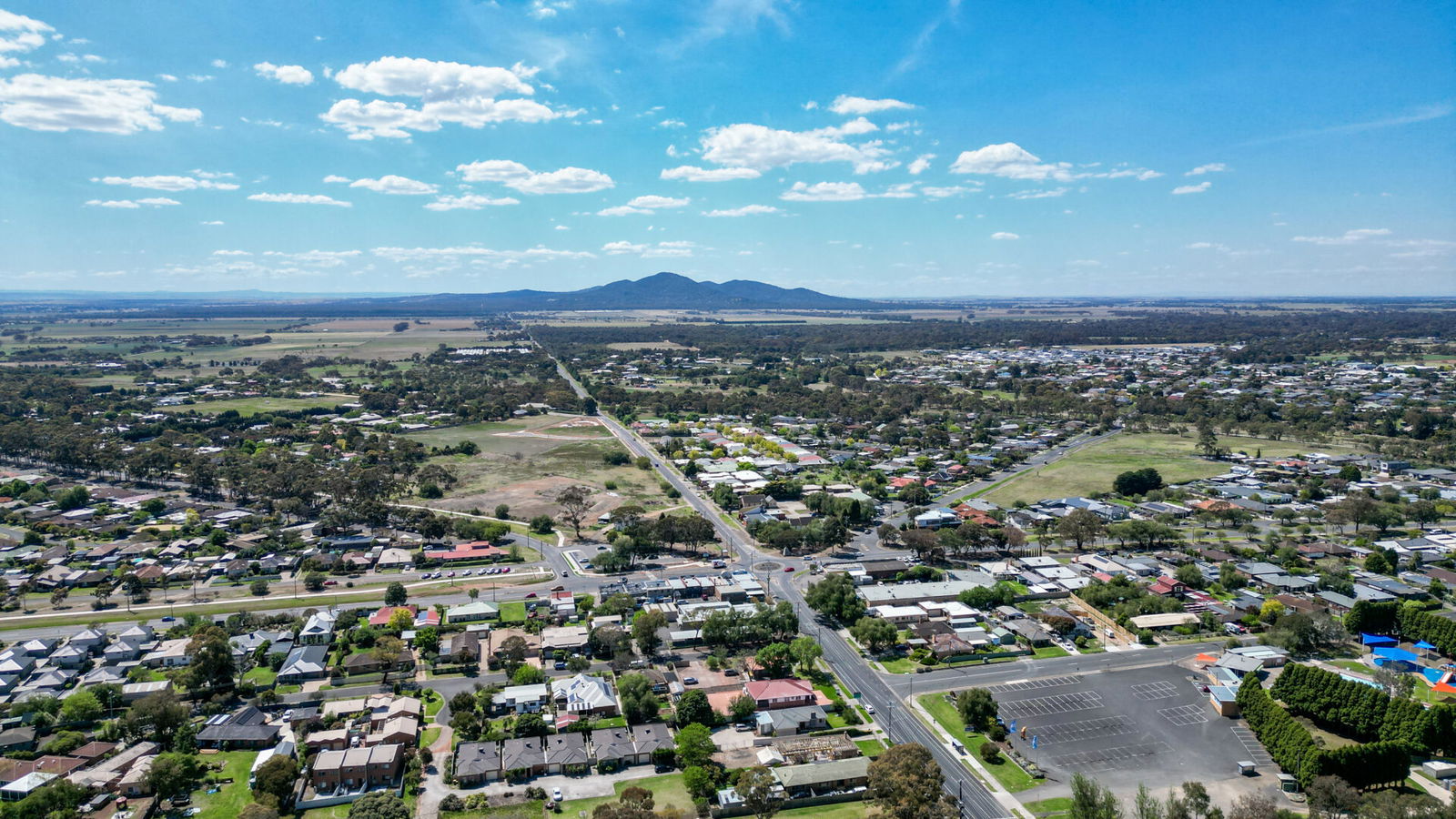
Aerial view of Lara, VIC - sourced from Lara Real Estate.
For Capital Growth
Armstrong Creek is one of Victoria's largest master-planned growth areas, positioned between Geelong and the Surf Coast. It strongly appeals to families seeking modern homes, schools, shopping, and open space within reach of both Geelong and coastal destinations.
Armstrong Creek does not currently have its own railway station, making car and bus access more important. Waurn Ponds and Marshall stations provide the nearest rail connections, while the Surf Coast Highway and Barwon Heads Road connect residents with central Geelong, Waurn Ponds, Torquay and the Bellarine Peninsula.
Local amenity has grown considerably. Armstrong Creek Town Centre and Warralily Village provide supermarkets, specialty retail, dining, medical and community services. School options include Armstrong Creek School, Oberon High School, Iona College and Geelong Lutheran College, with additional education infrastructure being delivered across the wider growth area.
Key employment nodes include central Geelong, Epworth Geelong, Deakin University's Waurn Ponds campus, the Waurn Ponds retail and technology precincts, Armstrong Creek's expanding town centre and the Surf Coast tourism and service economy. Council planning provides for housing, schools, neighbourhood retail, open space, sporting facilities and cycling connections across the growth corridor.
Why investors may consider Armstrong Creek: The suburb offers a comparatively accessible entry price, modern family housing and strong leasing activity. However, investors must be selective. Its large development pipeline creates competition between similar homes, so proximity to established shops, schools, parks and transport routes can materially affect performance.

Aerial view of Warralily Estate in Armstrong Creek - sourced from Warralily.
For Capital Growth
Sunbury is 40 kilometres north-west of Melbourne's CBD. Unlike many newer growth suburbs, it has an established town centre, railway station, schools, health services and a broad mix of older and newer housing.
Sunbury station is part of the metropolitan rail network and now connects through the Metro Tunnel. Current services give passengers direct access to stations serving Parkville's hospitals and university precinct, central Melbourne and St Kilda Road. The upgraded line provides more than 1,000 additional weekly services, with peak frequencies of five to ten minutes.
Road connections include the Calder Freeway, linking Sunbury with Melbourne Airport, the north-west and central Melbourne. The established town centre provides supermarkets, dining, professional services and specialty retail, supported by Sunbury Square and other neighbourhood shopping centres.
Education options include Sunbury Primary School, Sunbury College, Salesian College, Killara Primary School and several other government and non-government schools. Local employment is supported by retail, education, health, construction and local government, while the Calder corridor provides access to Melbourne Airport, Tullamarine, Broadmeadows and the wider north-west industrial and logistics sector.
Why investors may consider Sunbury: Sunbury offers established amenity, improved metropolitan rail connections and a diverse housing market. Its recent capital-growth momentum and substantial buyer pool are encouraging. Compared with the other suburbs profiled, however, its higher vacancy rate means investors should review current rental listings and the specific dwelling type before purchasing.
Rosenthal Estate in Sunbury - sourced from Rosenthal.
For Capital Growth
Epping is located 19 kilometres north of Melbourne's CBD. It combines established housing and community infrastructure with metropolitan rail access and one of Melbourne's most significant northern employment, healthcare and retail precincts.
Epping station is located on the Mernda line and is supported by several bus routes connecting surrounding communities including Wollert, South Morang and Thomastown. Road access includes Cooper Street, High Street, Dalton Road, the Metropolitan Ring Road and the Hume Freeway.
The suburb has extensive established amenity. Pacific Epping Shopping Centre and the Epping Homemaker Centre provide major retail, dining and entertainment options, while local shopping is also available around High Street. Education options include Epping Primary School, Epping Secondary College, St Monica's College and Melbourne Polytechnic's Epping campus, together with numerous schools in surrounding suburbs.
Employment access is one of Epping's strongest attributes. The Northern Hospital, Northern Private Hospital, Melbourne Market and the Cooper Street and O'Herns Road employment precinct support jobs in healthcare, logistics, food and beverage, advanced manufacturing and commercial services. The City of Whittlesea expects the Cooper Street and O'Herns Road precinct to generate more than 25,000 jobs when complete.
Epping is also designated as a Metropolitan Activity Centre. Current planning aims to deliver additional housing close to Epping station and improve connections between homes, employment, education and services.
Why investors may consider Epping: Epping offers a relatively affordable entry point compared with many suburbs a similar distance from the CBD, together with rail access, established services, a major healthcare precinct and a deep local employment base. Its very low reported vacancy rate is a positive rental indicator, although investors should consider how proposed higher-density housing and future development around the activity centre may affect particular property types.
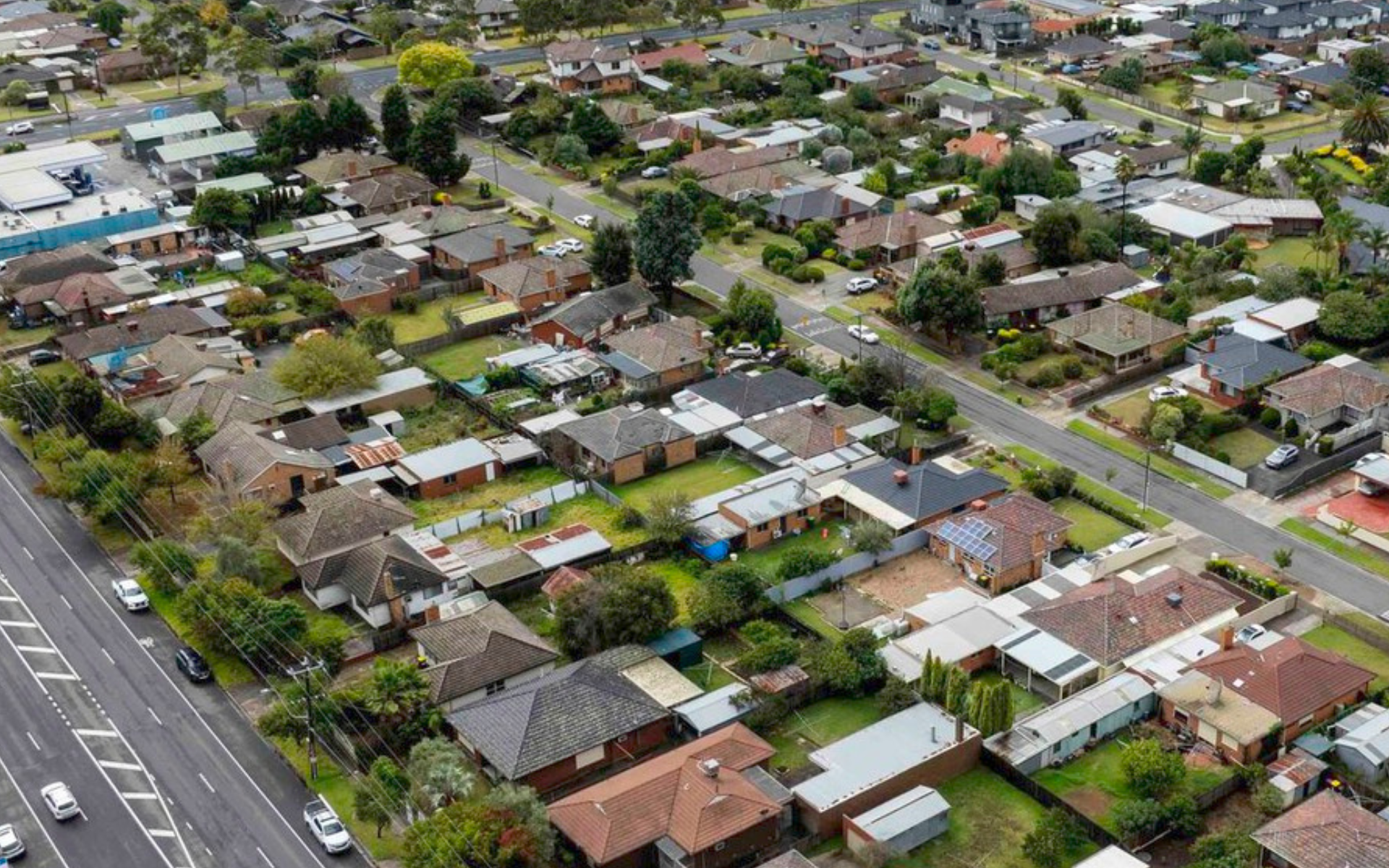
Aerial view of Epping homes - sourced from Barry Plant.
No particular suburb in the Melbourne region or greater Victoria is ‘blacklisted’, but there are typical warning signs that should indicate more deliberation on your investment:
Before making any offer on a property, it's important to collect data on current suburb medians for your specific dwelling type, rental vacancy rates, approved developments within a 1km radius, and average time on market for comparable properties.
Property data changes constantly, and suburb-level medians can conceal significant differences between property types and neighbourhoods. As mentioned above, purchasing investors should obtain current comparable sales and rental evidence, complete building and planning checks, review the local supply pipeline, and seek appropriate finance, legal, and financial advice.
At Propell Property Group, we help investors move beyond headline suburb statistics to identify properties that align with their financial position, objectives and long-term strategy.
Ready to explore your property investment options?
Contact the Propell Property Group team to discuss your next step.
Growth-corridor suburbs with funded transport upgrades and a broad local employment base are the strongest current candidates. Sunbury and Epping recorded the highest growth readings for both three and five years, supported by Metrol Tunnel connectivity and the northern healthcare and logistics precinct respectively.
A gross yield above 4% is a solid result in the current Melbourne market, and yields between 3.5% and 4.5% are common in outer-metro and Geelong corridor suburbs.
We recommend reading yield alongside vacancy, as a 4.2% yield with a 1.4% vacancy is a stronger position than a 4.5% yield and 3% vacancy, for example. Reliable rent can often be far more profitable than a high-yield property.
First-time investors are usually best served by an established suburb with rail access, existing schools and shops, and rental vacancy under 2%. Officer, Lara, and Epping are suburbs that, in 2026, meet all three criteria.
Regional Victorian property can be a strong investment opportunity. In particular, larger centres where the economy is diversified across health, education, manufacturing and logistics.
Additionally, entry prices are lower, and yields are generally higher than metropolitan Melbourne. The biggest trade-off is a thinner market with fewer buyers when you do choose to sell down the track.
Data Sources and Disclaimer
Market indicators were reviewed in August 2026 using realestate.com.au suburb profiles, PropRadar, OnTheHouse, REIV, Victorian Government infrastructure information and relevant council sources. Statistics are rounded and may vary between providers due to different methodologies, property samples and reporting periods.
This article provides general information only and does not constitute financial, taxation, legal or investment advice. Past performance is not a guarantee of future results. Prospective investors should consider their circumstances and obtain independent professional advice before making a property decision.